What is the image of God and how should this foundational doctrine change how we interact with people on a daily basis? Find out in our image of God learning capsule.

Curated topics for a disillusioned church

All of the resources that address the image of God.
What is the image of God and how should this foundational doctrine change how we interact with people on a daily basis? Find out in our image of God learning capsule.
After reading the article The Value of Human Life and watching Image of God Biblical Theme, dig deeper into the doctrine of the image of God with this four-part series that details the history of the doctrine and what the philosophy means for Christians and how they live in the world. The historical context that Tim Mackie and Jon Collins bring to the conversation cements the fact of how revolutionary Genesis 1 is and continues to be, although it is often lost on modern Christians.

Finishing a six-part series on what it means to be human Language of God hosts Jim Stump and Colin Hoggerwerf, along with scientists and theologians, turn their focus onto defining the complicated statement of humans being made in the image of God. Some have postulated that it is because we can see things as they are and how they should be. Others have said it is because we can repent and accept forgiveness. Is it biological? It is theological? Is it both? The duo explains the complexities (impossibility?) of trying to definitively define the term while ultimately concluding that we must approach the term with humility while looking to Jesus for how we are to reflect God in the world.

What if before we walked into a room we told ourselves that we represent the image of God in this room? In a challenging and insightful sermon author and pastor Skye Jethani says we have been taught that we are created to serve God, which he says is a pagan calling, but what we have really been created for is for representing God, which is a Christian calling.
Pastor David Ellis of Astoria Community Church (Astoria, NY) asks what does it mean to be made in the image of God? Is it our intelligence? Is it how we look? Is it our creativity? Ellis postulates that it is none of those as there are some people that are less intelligent and less creative as others, but are still fully made in the image of God. Ellis, instead, says that our capacity to have a relationship with God is what sets us apart and that God created us for three things - dignity, equality, and responsibility.
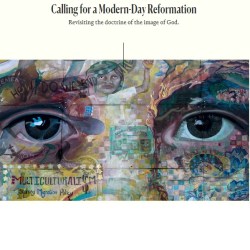
In a powerful essay author Jemar Tisby asks why many American Christians are not welcoming to the increasing diversity of the country when Revelation 7:9 talks about a diverse multitude standing before the throne of the Lord. As a result, Tisby calls for a modern-day reformation rooted in the image of God. Tisby goes one important step further providing clear, concrete steps such as renewed scholarship, diverse leadership, and making sure our orthodoxy and orthopraxy lineup while pointing out that it starts with us implementing these changes in our communities and organizations. This article is for those that have already have a solid foundation in the image of God and want a deeper dive.
Speaker Mike Cosper details three ways we bear God's images in the world - our capacity for relationships, our capacity for culture-making, and our capacity for wielding power. Each of these characteristics of God are detailed in the Bible, but what holds us back from realizing our full potential of being made in the image of God?

The doctrine of the image of God is like prayer, communion, or any other practice that has become perfunctory. We kind of know what it is and what it means, but the necessity and revolutionary nature of the practice or belief has dulled with time and repetition. In The Imago Dei: Humanity Made in the Image of God author, Lucy Peppiatt seeks to break the casual understanding of this indispensable doctrine by defining the three main perspectives, getting into the weeds by analyzing church fathers' and theologians' thoughts on the nuances of the doctrine, and finishing with a superb summary.

In two short videos totaling just under eight minutes Biblical scholar N.T. Wright dives deeper into the doctrine of the image of God. Wright says Genesis 1 is a calling to humans to look after the world and make it a place where heaven and earth come together. Since humans are created in the image of God we have a unique role in God's plan. Heaven and earth are temples and we are the priests that are called to worship God through our God-given vocation of filling the earth with people and taking care of the earth.

From discussing headlines to role modeling human dignity in our everyday interactions with other people author Daniel Darling lists six practical ways we can teach our children, while holding ourselves accountable, to the fundamental theology of the image of God.
 Sunday to Saturday
You must be logged in to post a comment.