BOOK: Blood Brothers

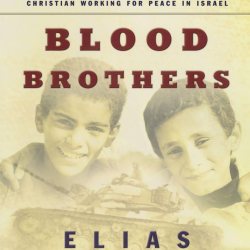
Elias Chacour’s Blood Brothers is a poignant and stirring memoir that delves deeply into the heart of the Israeli-Palestinian conflict through the lens of a Palestinian Christian. Chacour, a Melkite Greek Catholic Archbishop, offers a unique perspective on the tumultuous history and ongoing struggles of his people, blending personal narrative with a call for peace and reconciliation.
ARTICLE: Christians – There’s only one side to pick in Israel vs. Palestine

Depending on who you talk to, the Israeli-Palestinian conflict is Israel's fault, while others say it is Palestine's/Hamas' fault. Part of the issue is that the people discussing the conflict do not have a shared issue or, for Christians, are letting their eschatological views sway their opinions. But Matt Darvas says there is clearly one side to pick if you are a Christian - and that is the side of the peacemakers.

BOOK: How to Use the Book of Common Prayer

At over 600 pages the 1662 Book of Common Prayer can be daunting. Where does one start? Samuel Bray and Drew Nathaniel Keane in How to Read the Book of Common Prayer have penned a passionate and deeply insightful guide to one of Christianity’s most enduring treasures. The book deftly weaves history, theology, and practical application to show why the Book of Common Prayer (BCP) remains relevant, not just as a liturgical tool but as a wellspring of Christian devotion. The author’s love for the BCP is evident on every page, offering readers not just information but a heartfelt invitation to embrace its rhythms and teachings.

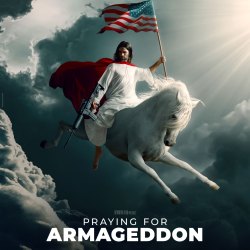
MOVIE: Praying for Armageddon

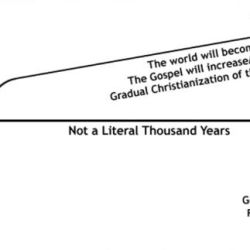
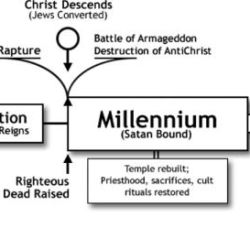
While many viewers will focus on the Christian nationalism in Praying for Armageddon, the pertinent issue that the film explores, but perhaps does not articulate, is how a Christian eschatological view can influence how an individual views global conflict, the state of Israel, politics, and world events in light of Biblical prophecy.

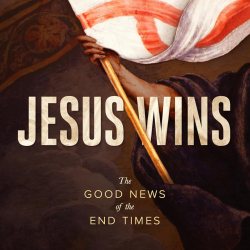
BOOK: Jesus Wins – The Good News of the End Times

In Jesus Wins, pastor Dayton Hartman makes his position clear from the outset: speculative discussions about the end times rarely offer any value and should never become a point of division. He emphasizes that as long as believers adhere to the foundational doctrines expressed in the Apostles' and Nicene Creeds, their specific views on eschatology (the study of the end times) should not fracture the church's unity.