
By Richard L. Pratt Jr. | Table Talk Magazine
Published in January of 2023
SUMMARY: In ancient times people believed that royalty – pharaohs, emperors, and kings – were representatives of gods on earth. These image-bearers learned the will of their gods and carried out the god’s purposes. This image-bearing title was exclusively reserved for those in power. Genesis 1:27, which declares that all humans are made in the image of God, was revolutionary. Instead of the will of gods being exclusive to the ruling class, Yahweh says that all humans can know and carry out his will. This theme laces the Bible and is a foundational tenet of the Christian faith. With a little bit of history, a little bit of theology, and a little bit of advice for today this is a perfect introduction to the image of God theology.
KEY QUOTE: “Moses taught the Israelites something radical in their day. They were as valuable as the most powerful king in the world. Moses teaches us the same radical lesson today. Every human life is valuable because every human being is the royal image of God.”
Read more at TableTalkMagazine.com
Our latest curated media on the image of God:

LEARNING CAPSULE: The Image of God
What is the image of God and how should this foundational doctrine change how we interact with people on a daily basis? Find out in our image of God learning capsule.
Read more
PODCAST: The Image of God Series
After reading the article The Value of Human Life and watching Image of God Biblical Theme, dig deeper into the doctrine of the image of God with this four-part series that details the history of the doctrine and what the philosophy means for Christians and how they live in the world. The historical context that…
Read more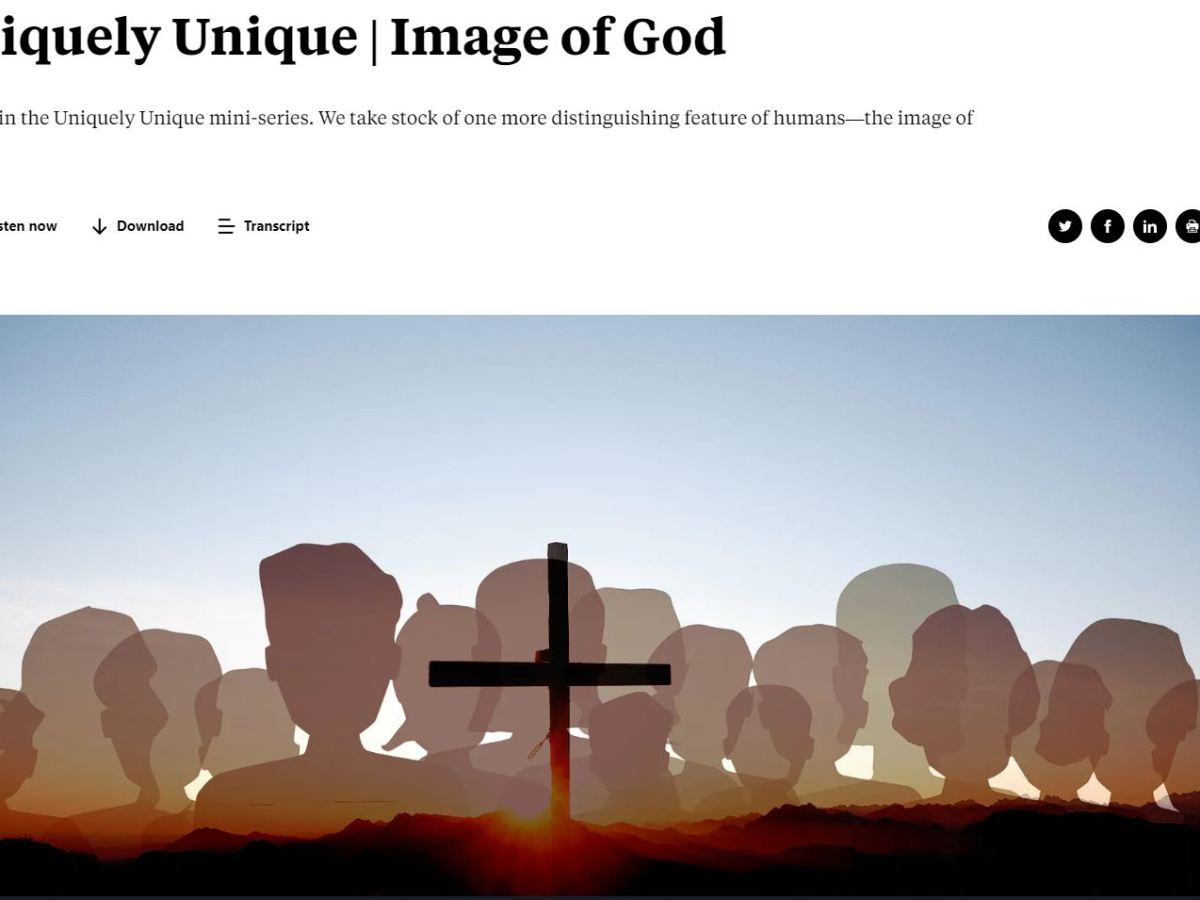
PODCAST: Uniquely Unique | Image of God
Finishing a six-part series on what it means to be human Language of God hosts Jim Stump and Colin Hoggerwerf, along with scientists and theologians, turn their focus onto defining the complicated statement of humans being made in the image of God. Some have postulated that it is because we can see things as they…
Read more Sunday to Saturday