BOOK: The Liturgy of Politics

Reflect on your average day and consider the routines, rituals, and practices you follow. These daily habits—what you spend your time on, the media you consume, and the people and places you engage with—compose a personal liturgy of life. This liturgy shapes you both politically and spiritually, often without being critically examined. In The Liturgy of Politics, Kaitlyn Schiess challenges readers to reflect on what influences their political and spiritual lives and to understand what true Christian political responsibility entails.

BOOK: Thou Shalt Not Be a Jerk

Politics matter. Politics matter because policies affect people. Policies affect Christians and non-Christians alike as they shape the community we live in. But, where does a Christian start politically? How does a Christian engage, advocate, and debate in the public sphere? What does the Bible have to say about politics? With humor and grace and a nod towards the Ten Commandments Eugene Cho in Thou Shalt Not Be a Jerk lists 10 "thou shalts" a Christian should follow when engaging in the public sphere.

Compassion (&) Conviction book cover

BOOK: Compassion (&) Conviction

Many Christian American voters are tossed about by their ideological political party as they lack a framework for engagement. Instead of the Bible dictating a Christian's politics, partisan politics dictate what Christians go to the Bible for. For Christians, this should not be so. In Compassion (&) Conviction, Justin Giboney, Michael Wear, and Chris Butler clearly and succinctly explain why Christians should be involved in politics, define a biblical framework for approaching politics, explain how Christians can engage in partnership with those that hold different values, and show how Christians can be distinctly Christian in the public square.

BOOK: The Ballot and the Bible

Despite the decline in American church attendance quoting the Bible in the public square still holds cultural sway. Each year presidential hopefuls reference Matthew 5 and the city on a hill while those whose political party is in power appeal to Romans 13. One of the most recent egregious examples happened in June of 2020 when President Donald Trump posed in front of St. John's Church in Washington D.C. with a Bible in hand for an awkward photo-op. When asked if the Bible was his he replied, "It's a Bible." These examples show people using the Bible, and it's cherry-picked verses, as political props--and it's been happening since the beginning of the United States. In The Ballot and the Bible Kaitlyn Schiess asks us to peer through the lens of traditional and contemporary American history to examine how Americans have used the Bible for both good and bad in the public sphere while asking the reader to examine their own tendencies to manipulate the Bible for their own political beliefs.

BOOK: Reclaiming Hope

In the introduction to Reclaiming Hope Michael Wear provides a fitting definition of reclaim which includes recovering a wasteland. Most Americans, no matter where they stand on the political spectrum, would agree that our current political climate is a wasteland. The means always justify the ends--especially if it humiliates and defeats the opponent. Compromise is blasphemy. Partisanship is king. Simply put elected officials and the voting public have lost hope.

BOOK: Bad Faith

How did the Republican party and white evangelicals become synonymous? Has abortion always been the focus of the Republican party and white evangelicals? In a tight, accessible 140 pages, author Randall Balmer traces the roots of the Religious Right and its wedding to the Republican party from the 1830s through the 1970s before linking the movement to its current iteration in the 21st century.

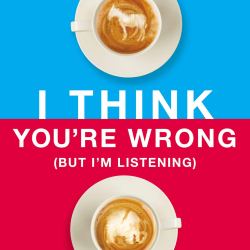
BOOK: I Think You’re Wrong (But I’m Listening)

Pantsuit Politics Podcast co-hosts and lawyers Sarah Stewart Holland and Beth Silvers have over 525 episodes and five years of experience talking about controversial issues. In I Think You're Wrong (But I'm Listening) the duo distills the lessons they’ve learned from the podcast into ten rules for Christians to guide them as they discuss politics. From advocating for talking about politics, to getting curious about other people's views, to being comfortable with nuance and paradox, Holland and Silvers provide practical ways to breakout of political divisiveness and engage in conversations with grace and nuance.