
Our top 5 commonly asked questions on Halloween:
- In a nutshell, what are Halloween’s roots and origins?
- What is one reason to celebrate Halloween?
- What is one reason not to celebrate Halloween?
- Should Christians celebrate Halloween?
- What are some ways to redeem Halloween?
1. In a nutshell, what are Halloween’s roots and origins?
Sunday to Saturday: The term Halloween is strictly a Catholic term meaning “holy evening.” Halloween is the day before All Saints Day when the church’s martyrs are remembered. The pagan Celtic New Year’s festival of Samhain (Sow-en), which marked the transition from summer to winter celebrated on Oct. 31, is generally thought of as the start of Halloween although the link between Halloween and Samhain is debatable. The Celts did not believe in writing so very little of their history was recorded. The association of Samhain with death came almost exclusively through its association with Halloween and its tradition of remembering martyrs. Samhain’s contribution to our modern understanding of Halloween is more in tone than any ritual.
Halloween was first celebrated in the sixth century on May 13, but Pope Gregory III moved the Halloween celebration to Oct. 31 in the eighth century. He may or may not have known about Samhain as All Saints Day was celebrated at different times of the year in different countries. Where it gets murky is when the holiday made its way to America in the 19th century when hundreds of thousands of Irish and Scottish immigrants made their way to the United States. The great melting pot of America combined the customs of Halloween, of Samhain, and the customs of immigrants from a variety of countries eventually being taken over by secular commerce.
For example, the bonfire tradition originates from Ireland and England, costumes come from the French, trick or treating from Canada, bobbing for apples and carving gourds from Ireland, and divination from Scotland.
In summary, It is easier to think about Halloween and Samhain as two distinct holidays although the waters have been muddied over the centuries. Halloween is a distinctly Christian celebration while Samhain is a distinctly pagan one. The current iteration in the United States is a distinctly secular holiday with many unaware of the Catholic or pagan origins.
“Halloween is surely unique among festivals and holidays. While other popular calendar celebrations, including Christmas and Easter, have mixed pagan and Christian traditions, only Halloween has essentially split itself down the middle, offering up a secular or pagan festival on the night of 31 October and somber religious observance on the day of 1 November. As with Valentine’s Day, many of those who celebrate Halloween are unaware of its Catholic history or meaning; but while Valentine’s Day has remained recognizably the same for at least a century, Halloween has transformed over and over again. What began as a pagan New Year’s celebration and a Christian commemoration of the dead has over time served as a harvest festival, a romantic night of mystery for young adults, an autumnal party for adults, a costumed begging ritual for children, a season for exploring fears in a controlled environment and, most recently, a heavily commercialized product exported by the United States to the rest of the world.” Lisa Morton, Trick or Treat?, (London, UK: Reaktion Books, 2007) 7.
“To examine the history of Halloween is to recognize that it is not a holiday that has been celebrated the same way over centuries, nor one whose meaning is fixed. If it is a fixture in our annual calendar, it is also a holiday that has been reinvented in different guises over the centuries. Those reinventions can be related to the changing demographic regimes of the past; to the making of different ethnic, national, and sexual identities, to the shifting social and political anxieties of late twentieth-century America; and to the commercialization of leisure with which Halloween is now very much associated. It has always operated on the margins of mainstream commemorative practices, retaining some of the topsy-turvy features of early modern festivals–parody, transgression, catharsis, the bodily excesses of carnivalesque–and recharging them in new social and political contexts. That is part of the secret of its resilience and vibrancy.” Nicholas Rogers, Halloween: From Pagan Ritual to Party Night, (Oxford, UK: Oxford University Press, 2003) 10.
“Halloween was influenced by Christian holidays. For instance, the name Halloween is derived from All Hallows Eve, the night before All Saints Day. there is kind of a mixing of pagan influence with Christian influence…You have to be careful logically that you don’t evaluate something totally based on its origin because things change, they develop, they move forward. So, many of the practices that contemporary people today, like sending their kids out in spooky outfits and collecting candy, is probably very different in orientation than some pagan festivals would be. You can want to think clearly and carefully when drawing these logical distinctions.” Ken Samples, “Should Christians Celebrate Halloween? | 28:19 ep 121” YouTube, uploaded by Reasons to Believe, 27 October 2020. https://www.youtube.com/watch?v=RhIHtWGiIr8
“We shouldn’t pretend that Halloween is 100% influenced by Celtic culture. It is important to say that the holiday that we celebrate as Halloween is a patchwork of traditions especially traditions borrowed from Christian Europe…Halloween is a patchwork of traditions with a very long and complicated history. And a history that is deeply intertwined with mythology and religion.” Andrew Mark Henry, “History of Halloween: Pagan or Christian?” YouTube, uploaded by Religion For Breakfast, 18 October 2016. https://www.youtube.com/watch?v=ZVB5rPfWPtc
“Modern, mass-media histories of Halloween — the kind that proliferate, sound-bite-style, every October — often leave the impression that the holiday has been handed down more or less intact, from Celtic antiquity (similarly hollow claims are often made for the very modern religion of Wicca). In reality, contemporary Halloween is a patchwork holiday, a kind of cultural Frankenstein stitched together quite recently from a number of traditions, all fused beneath the cauldron light of the American melting pot.” David Skal, Death Makes A Holiday, (New York, NY: Bloomsbury USA, 2002) 20.
2. What is one reason to celebrate Halloween?
Sunday to Saturday: An opportunity to share with your children that death and darkness are not something that will win nor should be feared. Christ has defeated death and therefore there is no need to fear.
“We Christians can celebrate the fact that at death we pass from the land of shadows into the land of light. But this assurance is not for everyone. Halloween is also the time for thoughtful evangelism. In some Halloween settings, this has been crudely done with grotesque allusions, making a burlesque of a serious message. But sensitively communicated, All Hallow’s Eve can be a ripe time for communicating Christ’s power over death and evil.” Harold L. Myar, “Is Halloween a Witches’ Brew?” Christianity Today, 22 October 1982, https://www.christianitytoday.com/ct/1982/october22/is-halloween-witches-brew.html
“Halloween can be a time of acknowledging the darkness and the darker spiritual forces around us in a humorous or light-hearted way because we know that they are, essentially, powerless in the face of the God of Jesus Christ.” Kira Austin-Young, “Reclaiming Hallowtide” Christianity Today, 30 October 2017, https://www.ministrymatters.com/all/entry/8495/reclaiming-hallowtide
“Fear over Halloween reverses the gains of early Christianity and its victory over the fear of those tiny little tyrant pagan gods. They fled from the sign of the cross. Now we cower or worse attack the liberty of those who do not cower. So very, very, very tired of the whole Christian killjoy thing. The Bible is not a book of don’ts. It’s a book of do’s with a few don’ts mixed in because some kinds of behavior interfere with living a full life. Want to cower in fear? Your choice. Don’t goad us into it. Halloween is a Christian holiday, All Hallows Eve, designed to mock the powers of darkness, and demonstrate that we don’t fear them. I plan to live in the true spirit of Halloween, which is not to fear kids in masks or to fear people who fear kids in masks.” Jerry Bowyer “Taking Back Halloween with Mocking and Laughter” The Gary DeMar Podcast, 21 October 2022, https://garydemar.libsyn.com/taking-back-halloween-with-mocking-and-laughter
“Do Halloween and its trappings if you must, but let’s also open our eyes and those of children, in an age-appropriate way, to the reality of evil in this world. Not a few bad people doing a few bad things, but evil as a world that is badly out of kilter with the way that God made it to be and lots of people suffering while a few live lives of comfort…Once we acknowledge the reality of evil. Once we allow our children to acknowledge that reality they and we can have a deeper appreciation of the greater power of God’s love.” Stephen Kuhrt “Getting the Most Out of Halloween” CCNM Sermon Downloads, 30 October 2022, https://ccnm.org/sermons/2022-10-30/11/getting-the-most-out-of-Halloween
3. What is one reason not to celebrate Halloween?
Sunday to Saturday: There is no doubt that Halloween has some pagan roots. And there is no doubt that pagan religions embrace the holiday. There is evil in the world and it is generally more accepted and celebrated during the month of October. In its current iteration in the United States, there is a focus on the gruesome and grotesque. And there is a distinctly sexual side to the holiday. All of these things are true. If one is sensitive to any of those issues, then one should not participate in the holiday. Those coming from a background of a pagan religion may choose not to celebrate as well.
4. Should Christians celebrate Halloween?
Sunday to Saturday: There are three ways a Christian can approach a holiday – receive it, reject it, or redeem it. Another way to put it is we can contend and fight for the holiday (Jude 3:3) or contextualize it (1 Cor. 9:19-23). Paul advocates for both in the New Testament.
There is a sliding scale within each approach. For example, within the receiving category, there are people who fully embrace the holiday with no exceptions to those who celebrate, but with caveats. Within the rejecting category, the scale ranges everywhere from teaching against it to not actively participating. Within the redeeming category, there are those that dress up, but avoid the modern interpretation of the holiday or choose to just hand out candy.
At Sunday to Saturday, we advocate for redeeming the holiday while clearly recognizing that this may not be possible for all Christians. The bottom line is that Christians should interrogate our motives for celebrating, rejecting, or redeeming the holiday and use our Christian conscience to choose the best route for our own situation.
“In order to navigate the waters successfully, one must always distinguish between the merely cultural aspects of Halloween and the religious aspects of the holiday. In the past, the church has tried to subsume the religious aspects of Halloween by adding a church holiday. But again, this is a questionable area. It seems that Christians can easily participate in (with wisdom) some cultural aspects of the holiday, and there is some potential for the pagan cultural practices to be enjoyed—but care must be taken. There is a big difference between kids dressing up in cute costumes for candy and Mardi-Gras-like Halloween parties, offensive costumes, and uninhibited excess. Therefore it’s naïve to make a blanket judgment to reject or accept Halloween as a whole. There should be no pressure to participate, but for those Christians whose conscience permits we should view it as an opportunity to engage wisely with our culture.” Justin Holcomb, “What Christians Should Know About Halloween” JustinHolcomb.com, 31 October 2011. https://justinholcomb.com/2011/10/31/what-christians-should-know-about-halloween-2/
“When we look at days like Halloween that have been hijacked by the devil, we shouldn’t be intimidated by this. Instead, we should ‘tweak the devil’s beard’ and find ways towards redeeming Halloween for the church again.” Luke Gilkerson, “Redeeming Halloween: How Should Christians Approach Halloween?” IntoxicatedonLife.com, 27 October 27 2013. https://www.intoxicatedonlife.com/redeeming-halloween/
“Ultimately, Christian participation in Halloween is a matter of conscience before God. Whatever level of Halloween participation you choose, you must honor God by keeping yourself separate from the world and by showing mercy to those who are perishing. Halloween provides the Christian with the opportunity to accomplish both of those things in the gospel of Jesus Christ. It’s a message that is holy, set apart from the world; it’s a message that is the very mercy of a forgiving God. What better time of the year is there to share such a message than Halloween?” Travis Allen, “Christians and Halloween” Gty.org, 11 October 2019. https://www.gty.org/library/articles/A123/christians-and-halloween
“There is no one size fits all on the foundation or the genesis of Halloween. We have to be careful that we don’t commit the genetic fallacy that we refer to in the philosophy of religion — that is to dismiss something outright because of how it started or how it originated. Just because something has a dark origin does not mean that it is perpetually dark.” Bobby Conway “How Should Christians Think About Halloween? | Unapologetic Episode 49” Christianity Still Makes Sense, 27 October 2021, https://open.spotify.com/episode/1Cgp5MYNpMgUvzTqhKB1gQ
“To redeem means to recover something from the power of something else…To redeem a part of our culture is to recognize that there are important truths within it, but there are truths that have been twisted and misused and combined with error. So we redeem or recover those errors for Godly purposes. We are saying there is truth somewhere in there, something rings true in there and I am going to pull that out. I am going to redeem that from within the lies that it is contained.” Luke Gikerson, “Redeeming Halloween: How Should Christians Approach Halloween?” YouTube, uploaded by Luke Gilkerson, 31 October 2015. https://www.youtube.com/watch?v=IJ5M5Z2ZIHE
“Perhaps we should do something radical and return Halloween to its roots as an All Saints’ vigil. Many churches already hold harvest festivals and trunk or treat events on the evening of October 31. Why not plan those along with a simple All Hallows’ Eve worship service and mark it as the beginning of Allhallowtide, a three-day period of celebration and remembrance?” Shane Raynor, “Redeeming Halloween by Rediscovering AllHallowtide” MinistryMatters.com, 2 October 2015. https://www.ministrymatters.com/all/entry/6356/redeeming-halloween-by-rediscovering-allhallowtide
“And so as it turns out, Halloween is a subversion and transformation of a dark ritual. Only it isn’t a Christian transformation of ancient paganism, but rather a modern secular domestication of youthful energy and rebellion. While there are several elements from earlier traditions involved in modern Halloween, they are pieced together in new ways and given meanings quite distinct from their predecessors. As such, this must influence the Christian opinion of Halloween more so than fears of ancient paganism or medieval Catholicism. The question is not directly liturgical, but is rather moral, and especially has to do with social prudence.” Steven Wedgeworth, “Halloween: Its Creation and Recreation” Calvinistinternational.com, 20 October 2013. https://web.archive.org/web/20230328031302/https://calvinistinternational.com/2013/10/30/halloween-creation-recreation/
“Ultimately Christian participation in Halloween, as long as you are not violating Scripture, is a matter of conscience before God. Christian liberty means we want to honor and imitate the Lord Jesus Christ in a watching world and without causing others to stumble. If you abstain completely, then that’s great, but don’t scold others who are choosing to honor God in their way. If you are looking down on brothers and sisters in Christ for deciding to do things differently than you do, then guess what, you might be sinning by judging them and by being self-righteous.” https://www.listennotes.com/podcasts/a-word-fitly-spoken/christians-when-halloween-ma5BO6SIjgn/
“Romans 14 is a really good guide here. For those of us who have no problem with (Halloween) at all, we should have a level of respect and understanding for people who cannot separate the cultural symbol from some of its origins. There should be respect the other way because most cultural symbols and our language, the meanings tend to shift over time.”…https://jdgreear.com/podcasts/should-christians-celebrate-halloween/
“In the gray issues, we have to be careful not to pass judgment…Either way, do not pass judgment. If you are that person who stays home (and does not celebrate Halloween) then don’t pass the judgment on me because I chose to take my kids out. And likewise, if I choose to take my kids out I shouldn’t pass judgment on that person who chooses not to. I think there is some liberty here. You can make a choice here and neither choice is sinful. What is sinful is when you start to engage the darkness.”…https://open.spotify.com/episode/37qGSJcMj5UZQm8dG1lODT
“It is an opportunity where people stop hanging out in their backyards and hang out in their front yards….there is no better time to get to know your neighbors than Halloween because people are open to getting to know people, to getting out and visiting so I like to see Halloween through the lens of opportunity than rather look at the negative side.”…https://www.listennotes.com/podcasts/growing-leaders/episode-055-what-does-the-EuwVY4oCJj7/
5. What are some ways to redeem Halloween?
Sunday to Saturday: We are big believers in the redemption method as this is rooted in the hope that Jesus is redeeming all things. No day can belong to Satan as he has already been defeated. Death has no power over us. As a result here are some ideas on how a Christian can redeem Halloween.
- Give out (the best) candy
- Make the front of your yard an inviting place to hang out. Have a firepit. Offer free hot cider and coffee. Cook hotdogs and hamburgers.
- Approach the holiday with humility and not pride. If a family celebrates Halloween and you don’t then don’t judge. The same is true if a family does not celebrate and you do.
- Offer a place or talk with your church about setting a place for people to light a candle and remember a loved one. See Chadwick Anderson‘s article, Engaging Our Neighbors in Re-Membering Halloween.
- Take the opportunity to talk to your kids about death
- In church read all of the names of the people that have died in the current year
- Esau McCaulley takes the opportunity to tell his kid about saints, using Lesser Feasts and Fasts as a guide, Vintage Sinners and Saints or the Book of Common Prayer: Pocket Edition works as well. Also, don’t hesitate to talk about the people who have been instrumental in your own faith – relatives, friends, etc.
“Four ways to engage with the community: Practice hospitality—have the best candy so that your house will be the house people come to, and linger! Get creative—have spiced cider and pumpkin bread for the adults so that you can engage your neighbors in conversation. Reach out—Halloween is a great ‘excuse’ to go to your neighbors’ houses and get to know them. Be prayerful and present—ask the Spirit to lead you and give you wisdom.” Jessica Wolstenholm, “Halloween: The Meaning, History, and Christian Response” Gominno.com, 7 October 2020. https://www.gominno.com/parents/halloween-meaning-history-christianity/
“We can’t know without absolute certainty what is true and not true about the origins of Halloween. So, instead of focusing so much on how we should respond to how people in our culture celebrate, perhaps we should focus on the people of the culture? Isn’t that what Jesus did? He didn’t agree with how the woman at the well was living, but he met her at the well. He didn’t agree with how the tax collector was living, but he met with him in his home. Jesus took every opportunity to love people regardless of what they were doing.” https://www.listennotes.com/podcasts/parenting-with/ep-040-should-christians-GlTNS9YaKzq/
“It’s also an opportunity to explore the Christian aspect of this day – a time to remember those who have been martyred for their faith and to pray for the 100 million-plus Christians who still face persecution, imprisonment, and death in the world today.”..https://baysidechurch.com.au/blog/a-christian-response-to-halloween/
More curated resources on Halloween:

LEARNING CAPSULE: Halloween
Most Christians reject or accept Halloween without much thought. Those who don’t like the holiday assume satanic origins while those who like the holiday celebrate with no critical thought. Before deciding whether to celebrate or not, please take the time to learn about the complex history of the holiday and the many ways Christians can…
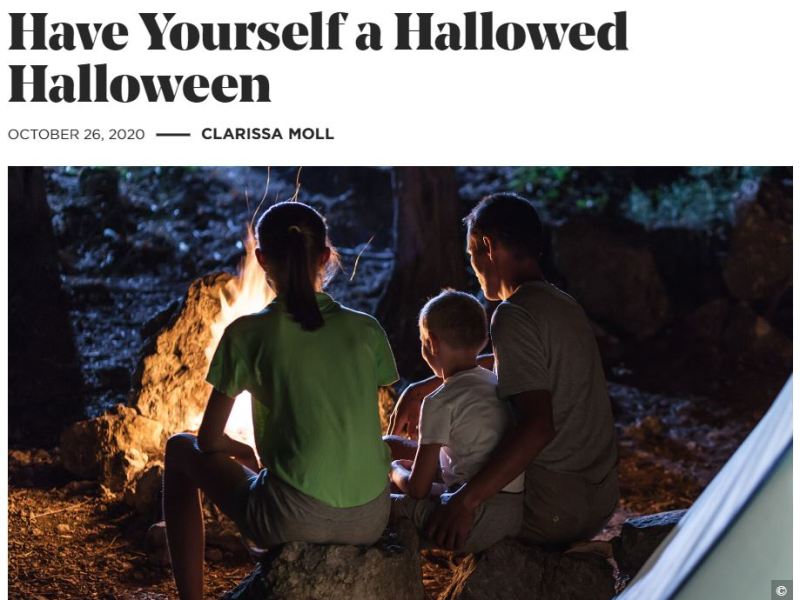
ARTICLE: Have Yourself a Hallowed Halloween
Instead of outright rejecting Halloween, author Clarissa Moll suggests four unique ways to “creatively opt-in” to celebrate the holiday with your kids.

SHOW: Should Christians Celebrate Halloween? (The Beat)
The Bible does not contain a verse stating whether a Christian should or should not celebrate Halloween. With that in mind host Allen Parr provides five keys (avoid genetic fallacy, avoid misuse of Christian freedom, avoid being legalistic, avoid violating your conscience, and avoid anything that appears demonic) on how to approach the holiday.
 Sunday to Saturday